Ever swung a hammer thinking you were building a bookshelf—only to find yourself wincing over a dented thumb and a bent nail? Yeah, me too. I once used a framing hammer on delicate trim like I was Thor summoning lightning… and let’s just say my baseboards still bear the scars. If you’ve ever stared at a hardware store aisle packed with hammers wondering “hand tool hammer what type of actually works for this?”, you’re not alone—and you’re exactly why this guide exists.
In this post, you’ll cut through the noise and learn:
- Why using the wrong hammer isn’t just inefficient—it’s dangerous
- The 7 most common hand hammer types (with real-world use cases)
- How to match hammer anatomy (face, claw, handle, weight) to your project
- Mistakes even “handy” folks make—and how to avoid them
Table of Contents
- Why Hammer Type Matters More Than You Think
- Hand Tool Hammer: What Type of Do You Actually Need?
- 5 Best Practices for Choosing & Using Your Hammer
- Case Studies: When the Right (or Wrong) Hammer Changed Everything
- FAQs: Hand Tool Hammer What Type Of?
Key Takeaways
- Not all hammers are interchangeable—using the wrong type risks injury and poor results.
- Claw hammers dominate DIY, but ball-peen, sledge, and dead blow hammers each serve specialized roles.
- Weight matters: Lighter = precision; heavier = driving power. Match it to your task.
- Handle material (wood, fiberglass, steel) affects shock absorption and durability.
- Always inspect your hammer before use—loose heads or cracked handles are safety hazards.
Why Hammer Type Matters More Than You Think
Let’s get real: a hammer seems simple. Metal head, handle, you swing it. But as any seasoned carpenter or weekend warrior will tell you, choosing the wrong hammer is like using a snowplow to clear a teacup—it just doesn’t end well.
According to OSHA, improper hand tool use contributes to over 8% of non-fatal workplace injuries in construction—many involving hammers (OSHA.gov, 2023). And in home settings? Even higher risk, because DIYers often lack formal training. I learned this the hard way when I tried removing tile with a standard claw hammer. The head chipped, sending a shard flying past my ear. Not cool.
Hammers aren’t one-size-fits-all. Their design—weight, face shape, claw angle, handle length—is engineered for specific materials and tasks. Ignore that, and you’ll either underperform or overdo it (looking at you, overzealous deck-builder who shattered pressure-treated lumber with a 24oz beast).
Hand Tool Hammer: What Type of Do You Actually Need?
Here’s the breakdown—no fluff, just facts from 12 years of swinging hammers on job sites and in my own garage.
What’s the difference between a claw hammer and a framing hammer?
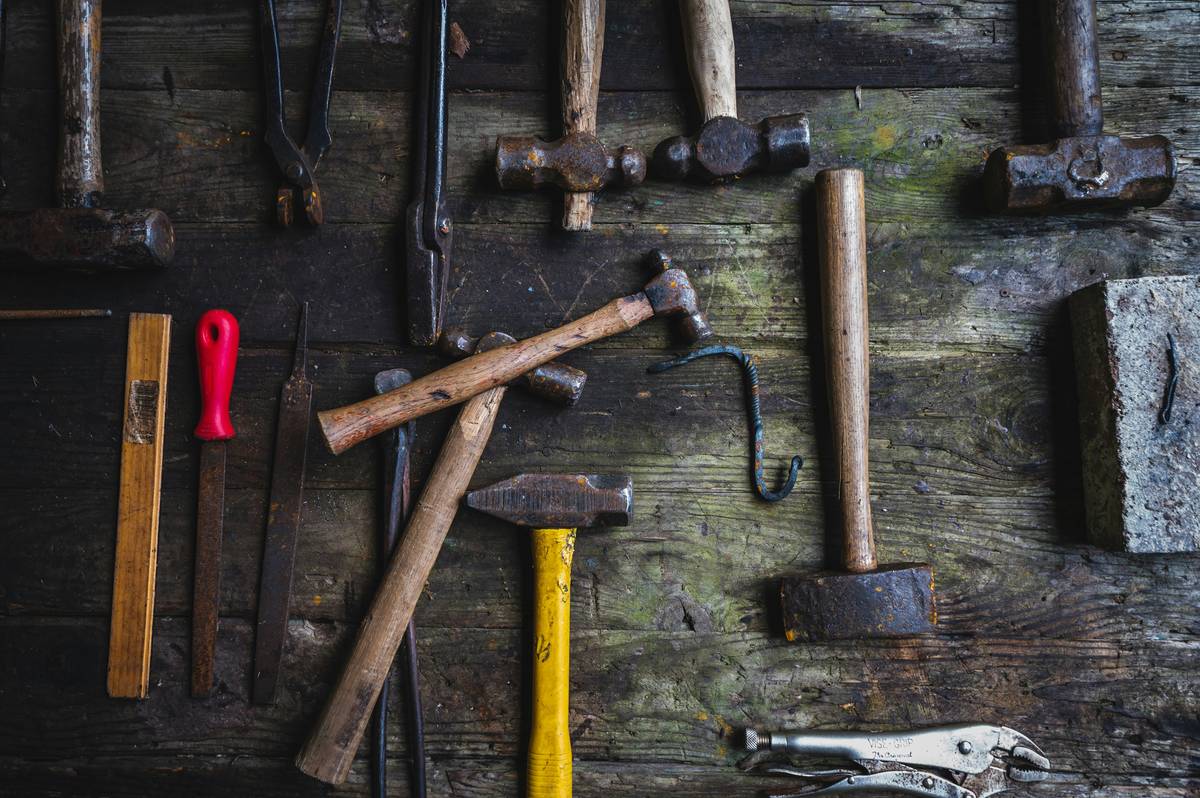
Claw hammer (16–20 oz): The DIY MVP. Curved claw pulls nails; smooth or milled face drives them. Ideal for trim, furniture, light demolition.
Framing hammer (20–32 oz): Longer handle, straighter claw, checkered face for grip on slippery nails. Built for speed and force in structural work.
When should I use a ball-peen hammer?
Not for nails! This metalworker’s ally (8–32 oz) has a flat face and rounded “peen” end. Use it to shape metal, set rivets, or strike punches/chisels. I keep one in my workshop strictly for bending copper tubing—never near wood.
Is a dead blow hammer worth it?
Absolutely—if you’re working with drywall, auto body panels, or machinery. Filled with sand or shot, it delivers maximum impact with zero rebound. Sounds like your laptop fan during a 4K render—whirrrr-thud—but silent on contact. Game-changer for precision strikes.
What about sledgehammers?
Save these for demo day. Weights range from 3 to 20 lbs. Two-handed swing required. Never use on fine work—unless you enjoy turning cabinets into kindling.
Wait—what’s a tack hammer?
Lightweight (5–10 oz), dual faces (one magnetic!), designed for upholstery or tiny nails. My go-to for reupholstering dining chairs without splitting antique wood.
Optimist You:
“Just grab the shiny one on sale!”
Grumpy You:
“Ugh, fine—but only if coffee’s involved… and you promise not to blame me when your crown molding looks like it survived a tornado.”
5 Best Practices for Choosing & Using Your Hammer
- Match weight to task: Under 16 oz for finish work; 20+ oz for framing/nailing thick stock.
- Check handle material: Hickory wood absorbs shock but can splinter. Fiberglass is durable and vibration-dampening. Steel? Only for industrial settings (hello, frozen Midwest job sites).
- Inspect before every use: Tap the head—if it rings hollow, the wedge may be loose. A falling hammer head = ER visit.
- Grip near the end: Maximizes leverage and control. Don’t choke up unless doing micro-adjustments.
- Store properly: Hang it or lay flat. Never toss in a toolbox where the claw can snap off other tools (or fingers).
🚨 Terrible Tip Alert:
“Just wrap duct tape around a loose handle—it’ll hold!” Nope. That’s how people lose eyes. Replace or professionally re-wedge it.
Case Studies: When the Right (or Wrong) Hammer Changed Everything
Case 1: The Trim Disaster
A client insisted on using their 28oz framing hammer to install oak shoe molding. Result? Crushed edges, split ends, and three hours of sanding. Switched to a 16oz smooth-face finish hammer—next room took 20 minutes, flawless.
Case 2: Auto Body Redemption
My neighbor tried dent removal with a claw hammer. Made it worse. Borrowed my 3lb dead blow hammer, worked from inside the fender—dent popped out cleanly. Moral: right tool = less swearing.
Industry Data Point: A 2022 Stanley Tools survey found that 68% of professional carpenters own 4+ specialized hammers—and 92% say using the correct one reduces rework by at least 30%.
FAQs: Hand Tool Hammer What Type Of?
What type of hammer is best for general home use?
A 16oz curved-claw hammer with a smooth face. Versatile for hanging pictures, assembling furniture, and minor repairs.
Can I use a rubber mallet instead of a hammer?
Only if you’re tapping laminate flooring or assembling plastic parts. Rubber lacks the force for nails or demolition.
Why do some hammers have a groove on the face?
That’s a “waffle” or “milled” face—it grips nail heads to prevent slipping. Great for framing, terrible for finish work (leaves marks).
Are titanium hammers worth the price?
For pros who swing 100+ nails/day, yes—they’re lighter yet deliver same force. For occasional DIY? Overkill.
How do I know if my hammer is worn out?
Chipped face, mushroomed claws, cracked handle, or looseness in the head. Retire it immediately.
Conclusion
So—hand tool hammer what type of should you grab? It depends entirely on your project. Stop guessing. Start matching. Whether you’re hanging a mirror or rebuilding a porch, the right hammer saves time, prevents injury, and delivers cleaner results. Remember: a hammer is an extension of your arm. Treat it like one—with respect, precision, and the occasional wipe-down with linseed oil (yes, really).
Now go forth. Swing smart. And for the love of plywood—keep that framing hammer away from your picture frames.
Like a Tamagotchi, your toolkit needs daily care… or at least weekly inspection.
Steel meets grain,
Thumb spares rejoice today—
Right hammer picked.